One of the biggest fears holding people back from international travel is the language barrier. But here’s the truth: you don’t need to speak the local language to have an amazing trip. With the right tools, attitude, and a handful of key phrases, you can communicate effectively almost anywhere.
Essential Translation Tools

Google Translate
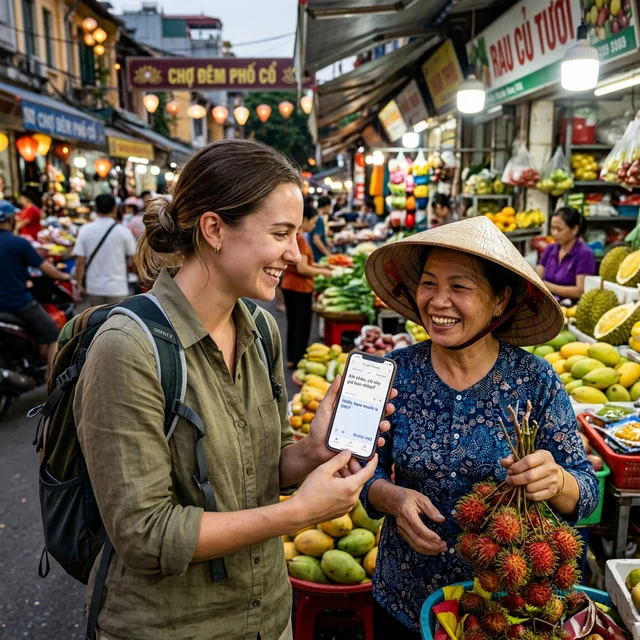
- Camera mode: Point your phone at signs, menus, and documents for instant visual translation
- Conversation mode: Real-time voice translation between two languages
- Offline packs: Download languages before your trip — works without internet
- Phrasebook: Save frequently used translations for quick access
Other Useful Apps
| App | Best For | Offline? |
|---|---|---|
| Google Translate | All-around translation | Yes (downloaded) |
| DeepL | Higher quality written translations | Partial |
| iTranslate Voice | Voice conversations | Premium only |
| Papago | Korean/Japanese/Chinese | Yes |
| Microsoft Translator | Group conversations | Yes |
Learn These 10 Phrases in Any Language
Before visiting any country, learn these in the local language:
- Hello / Goodbye
- Please / Thank you
- Yes / No
- Excuse me / I’m sorry
- Do you speak English?
- How much does this cost?
- Where is the bathroom?
- Help!
- I don’t understand
- The bill, please
The effort of speaking even broken local language is universally appreciated. People respond with warmth when they see you trying.
Non-Verbal Communication
Universal Gestures That Work Everywhere
- Pointing: At items you want, directions you need
- Showing fingers for numbers: Hold up fingers for quantities and prices
- The “eating” mime: Bring hand to mouth for “restaurant” or “food”
- The “sleeping” mime: Hands together, head tilted for “hotel” or “sleep”
- Thumbs up: Positive in most cultures (be cautious in parts of Middle East and West Africa)
- Smiling: The most universal language — a genuine smile opens doors everywhere
Show, Don’t Tell
- Show photos on your phone of what you’re looking for
- Point at menu items or dishes at other tables
- Use maps on your phone to show where you want to go
- Take photos of your hotel address/business card to show taxi drivers
Cultural Communication Tips
Pace and Patience
- Speak slowly and clearly (not loudly!) in English
- Use simple words and short sentences
- Avoid idioms, slang, and cultural references
- Be patient — the person is trying to help you
When English Fails
- Try French in West Africa, North Africa, and parts of Southeast Asia
- Try Spanish across Latin America
- Try basic Mandarin in Chinese-speaking regions
- In tourist areas, try other European languages — many people are multilingual
Real-World Scenarios
Ordering Food
- Point at the menu, hold up fingers for quantity
- Take a photo of what someone else is eating and show it
- Use Google Translate camera on the menu
- Learn allergy-related words in advance if you have dietary restrictions
Taking Transport
- Show the destination on Google Maps to the driver
- Have your hotel write the address in local script
- Screenshot the route before you lose signal
- Learn numbers for negotiating prices
Final Thoughts
Language barriers are not walls — they’re speed bumps. With patience, creativity, a smartphone, and a smile, you can navigate almost any situation. Some of the most memorable travel moments come from the creative communication that happens when you share no common language. The attempt to connect across languages is itself a beautiful part of travel.