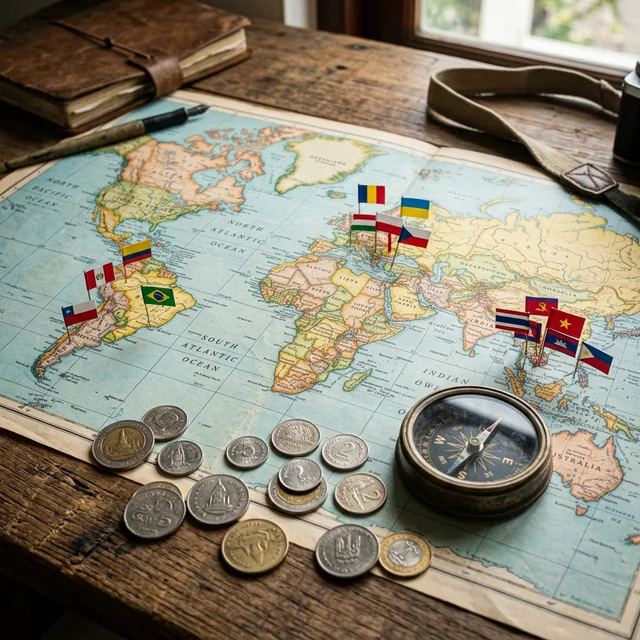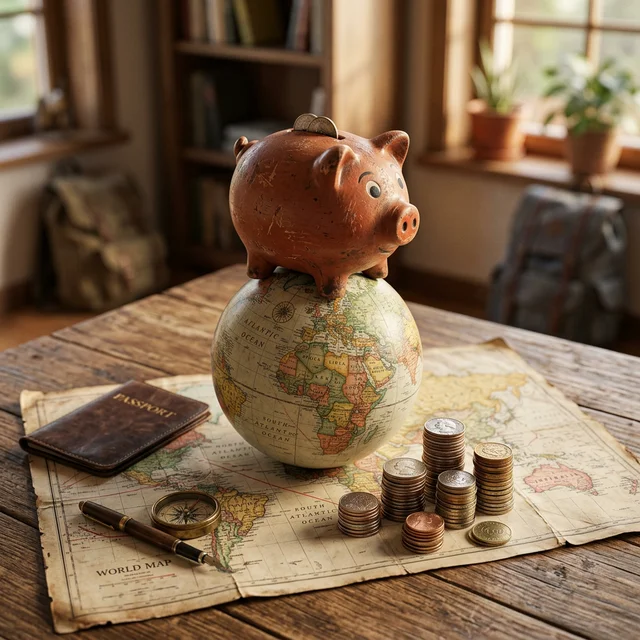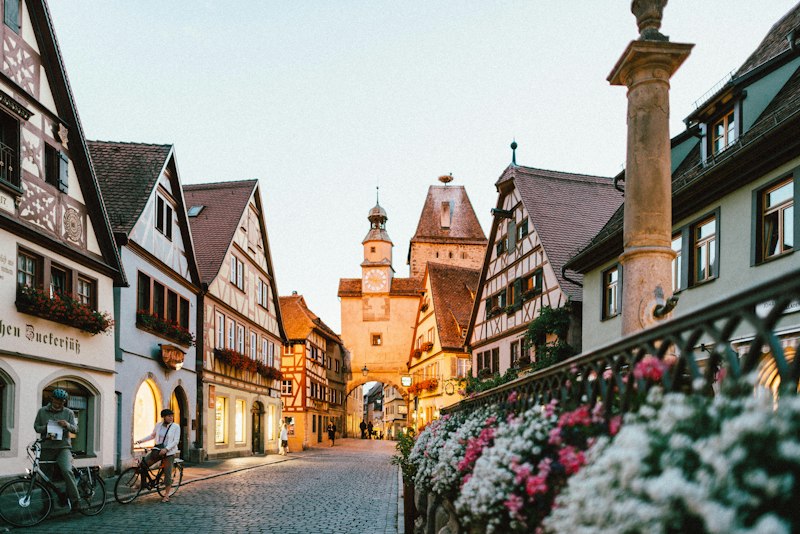
Europe on $50 a day? It sounds impossible when you hear about $20 cocktails in Paris or $200-a-night hotels in London. But thousands of savvy travelers prove every year that exploring Europe on a shoestring budget isn’t just possible — it can actually lead to more authentic, memorable experiences than luxury travel.
This guide breaks down exactly how to do it.
The $50/Day Budget Breakdown
| Category | Daily Budget | Strategy |
|---|---|---|
| Accommodation | $15–20 | Hostels, Couchsurfing, camping |
| Food | $15–20 | Markets, cooking, street food |
| Transport | $5–10 | Walking, day passes, budget buses |
| Activities | $5–10 | Free attractions, walking tours |
| Total | $40–60 | Average: ~$50 |
Important note: This budget is achievable in Eastern, Southern, and parts of Central Europe. Destinations like Switzerland, Norway, and Iceland will push significantly higher. Your $50 will stretch further in countries like Portugal, Greece, Poland, Hungary, and the Balkans.
Accommodation: Where to Sleep Cheap
Hostels ($10–25/night)
The backpacker’s classic. Modern hostels are clean, social, and offer much more than just a bed.
Money-saving tips:
- Book dorms with 6–8 beds (not 4-bed rooms — they cost more)
- Use Hostelworld and Booking.com to compare; book directly with the hostel for the best rate
- Choose hostels with free breakfast — it saves $5–8 per day
- Opt for hostels with kitchen facilities so you can cook
- Book in advance during peak season (June–August)
Couchsurfing (Free!)
Stay with locals for free through Couchsurfing.com. Beyond saving money, it’s the best way to get insider tips and authentic cultural experiences.
Tips:
- Complete your profile thoroughly and get verified
- Send personalized requests (not copy-paste messages)
- Read host reviews carefully
- Be a good guest — cook a meal, bring a small gift, clean up after yourself
House Sitting (Free!)
Websites like TrustedHousesitters connect travelers with homeowners who need pet/house-sitters. You get free accommodation; they get peace of mind.
Budget Hotels & Guesthouses
In Eastern Europe, budget hotels can cost as little as $15–25 per night for a private room — cheaper than many Western European hostels.
Food: Eating Well on a Budget
Strategy 1: Cook Your Own Meals
This is the single biggest money-saver. Shop at local supermarkets and markets:
- Breakfast: Buy bread, cheese, yogurt, and fruit (total: $2–3)
- Lunch: Make sandwiches or pasta from your hostel kitchen ($3–4)
- Dinner: Cook a simple meal — pasta with sauce, rice with vegetables ($3–5)
Strategy 2: Eat Like a Local
- Lunch specials: Many European restaurants offer prix fixe lunch menus at 50–60% of dinner prices
- Portugal: Daily “prato do dia” (dish of the day) for €6–8 at local tasca restaurants
- Spain: Tapas bars where you can eat well for €8–12
- Poland: “Milk bars” (bar mleczny) serve homestyle Polish meals for €2–4
- Hungary: Langos (fried dough with toppings) for €2–3
Strategy 3: Markets & Street Food
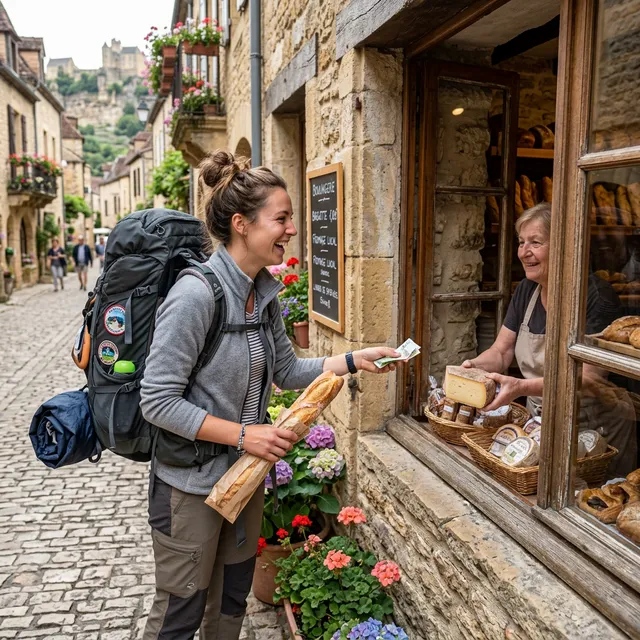
- French boulangeries: Baguette sandwiches for €3–5
- Italian pizzeria al taglio (pizza by the slice): €2–3
- German bakeries: Pretzels and pastries for €1–2
- Turkish döner kebabs: Found throughout Europe for €3–5
Strategy 4: Picnic!
Buy bread, cheese, cured meats, and a bottle of wine from a supermarket and enjoy a picnic in a park. This is not just saving money — it’s one of Europe’s greatest pleasures.
Transportation: Moving Around Cheaply
Between Cities
Budget buses are your best friend:
- FlixBus: The dominant European bus network with fares from €5–15
- BlaBlaCar: Ridesharing platform where you split fuel costs with drivers (€5–20 between major cities)
- Budget airlines: Ryanair, Wizz Air, and easyJet offer flights from €10–30 if booked early (watch out for baggage fees — pack carry-on only!)
Rail passes:
- The Eurail Pass can save money if you’re covering long distances in Western Europe
- For shorter trips, individual bus or train tickets are usually cheaper
- Eastern European trains are extremely affordable ($5–15 for multi-hour journeys)
Within Cities
- Walk: Most European city centers are compact and walkable
- Day passes: City transport day passes (€3–8) are much cheaper than individual tickets
- Bikes: Many cities have bike-share programs (€1–2/day)
- Avoid taxis: Always use public transport or walk
Free & Cheap Activities
Free Walking Tours
Available in virtually every European city. The guides work for tips (€5–10 is standard), and they’re often the best way to orient yourself in a new city. Companies like Sandemans, Free Tour, and Guruwalk operate across Europe.
Free Museum Days
| Museum | Location | Free Entry |
|---|---|---|
| Louvre | Paris | 1st Saturday evening of the month |
| British Museum | London | Always free |
| Prado | Madrid | Mon–Sat 6–8 PM, Sun 5–7 PM |
| Vatican Museums | Rome | Last Sunday of the month |
| Alte Nationalgalerie | Berlin | Free on Thursdays |
Other Free Activities
- Parks and gardens: Every European city has beautiful public parks
- Churches and cathedrals: Most are free to enter (Notre-Dame, St. Peter’s, Sagrada Família exterior)
- Street art tours: Self-guided in cities like Berlin, Lisbon, and London
- Beach days: The Mediterranean coast is lined with free public beaches
- Hiking: The Alps, Dolomites, and Cinque Terre offer world-class hiking at no cost
The Cheapest Countries in Europe
Based on a budget traveler’s daily spend:
| Tier | Countries | Daily Budget |
|---|---|---|
| Cheapest ($25–35) | Albania, North Macedonia, Bulgaria, Romania, Bosnia | $25–35 |
| Budget ($35–45) | Poland, Hungary, Czech Republic, Portugal, Greece, Serbia, Croatia | $35–45 |
| Moderate ($45–60) | Spain, Italy, Germany, Austria | $45–60 |
| Expensive ($60–80+) | France, UK, Netherlands, Ireland | $60–80 |
| Very Expensive ($80+) | Switzerland, Norway, Denmark, Iceland | $80–120+ |
Sample Budget Itinerary: 2 Weeks in Southern/Eastern Europe
| Days | City | Daily Cost | Highlights |
|---|---|---|---|
| 1–3 | Lisbon, Portugal | $40 | Alfama, Belém, pastel de nata, miradouros |
| 4–5 | Madrid, Spain | $45 | Prado (free evening), Retiro Park, tapas |
| 6–7 | Barcelona, Spain | $50 | Gaudí, Gothic Quarter, beach |
| 8–9 | Budapest, Hungary | $35 | Thermal baths, ruin bars, Danube views |
| 10–11 | Krakow, Poland | $30 | Old Town, Wieliczka Salt Mine, milk bars |
| 12–14 | Prague, Czech Republic | $40 | Castle, Charles Bridge, beer gardens |
Total for 14 days: ~$560 ($40/day average)
Money-Saving Apps & Tools
- Hostelworld / Booking.com: Compare accommodation prices
- Skyscanner / Google Flights: Find the cheapest flights
- FlixBus / Omio: Compare bus and train prices
- Too Good To Go: Buy discounted leftover food from restaurants
- Wise / Revolut: Fee-free currency exchange and spending abroad
- Maps.me / Google Maps: Offline maps (save on data costs)
10 Budget Travel Commandments
- Travel slowly — moving less means spending less on transport
- Cook at least one meal per day in your hostel
- Walk everywhere within a city
- Drink tap water (safe in most of Europe) instead of buying bottles
- Take free walking tours instead of paid attractions
- Travel in shoulder season (April–May, September–October)
- Use budget buses over trains in Western Europe
- Pregame at hostels before going out — bar prices are 3–5x higher
- Ask locals for cheap restaurant recommendations
- Remember that the best experiences are often free: sunsets, street performances, conversations with locals
Final Thoughts
Traveling Europe on $50 a day requires planning, flexibility, and a willingness to embrace discomfort occasionally. But the trade-off is immense: you’ll connect with locals in ways luxury travelers never do, you’ll discover hole-in-the-wall restaurants that no guidebook mentions, and you’ll prove that incredible travel experiences aren’t reserved for the wealthy.
The best things in Europe — walking along the Seine at sunset, hiking in the Swiss Alps, watching flamenco in a Seville backstreet, soaking in a Budapest thermal bath — cost little or nothing at all.