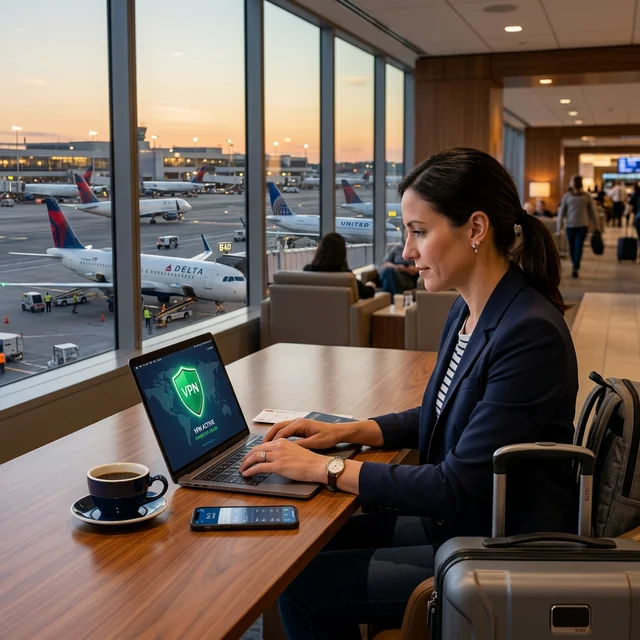
Your digital security is just as important as your physical safety when traveling. Public Wi-Fi, unfamiliar networks, and travel fatigue create perfect conditions for hackers.
VPN: Your #1 Tool
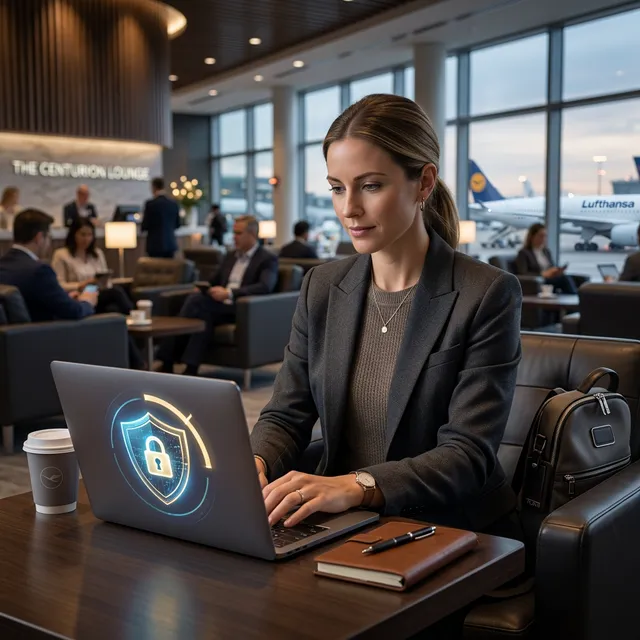 A VPN encrypts your internet connection, making it unreadable to hackers on public networks. Use it everywhere: airports, hotels, cafés. Recommended: NordVPN, ExpressVPN, Surfshark ($3-12/month).
Public Wi-Fi Rules
- Never do banking or enter passwords on unencrypted Wi-Fi
- Always verify the exact network name with staff (hackers create fake “Free Airport WiFi” networks)
- Use VPN every time you connect to public Wi-Fi
- Disable auto-connect to open networks
- Turn off Wi-Fi and Bluetooth when not in use
Device Security
- Enable Find My iPhone/Device before departure
- Use strong, unique passwords (password manager like 1Password or Bitwarden)
- Enable two-factor authentication on all important accounts
- Keep software updated — patches fix security vulnerabilities
- Back up your phone to cloud before travel
Financial Protection
- Enable transaction notifications for all cards
- Set daily spending/withdrawal limits
- Use contactless payment when possible (more secure than swiping)
- Never use unbranded ATMs — use bank ATMs only
- Check statements regularly for unauthorized charges
Common Digital Scams
- Fake Wi-Fi hotspots: Verify network names
- Shoulder surfing: Shield your screen when entering passwords
- USB charging stations: Use your own adapter or a data-blocking USB cable — public USB ports can transfer malware
- Phishing emails: Be extra cautious about clicking links while traveling
Final Thoughts
Digital security doesn’t have to be complicated. VPN + strong passwords + awareness of your surroundings = 99% protection. Spend 30 minutes before your trip setting up these protections, and travel with peace of mind.