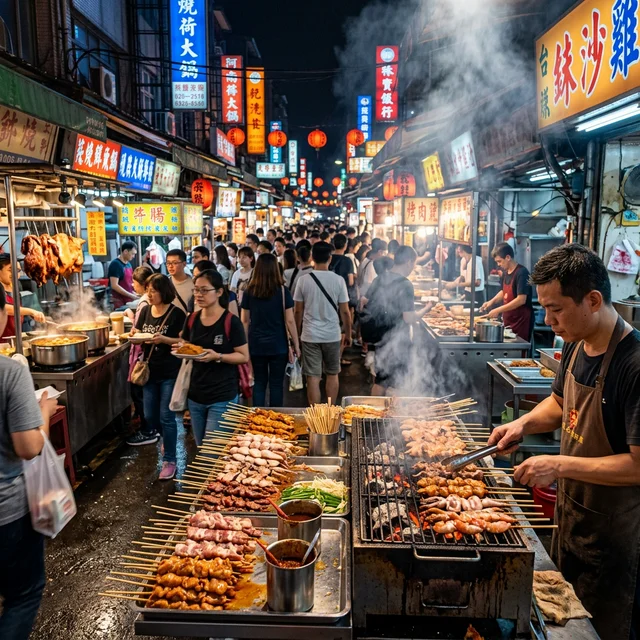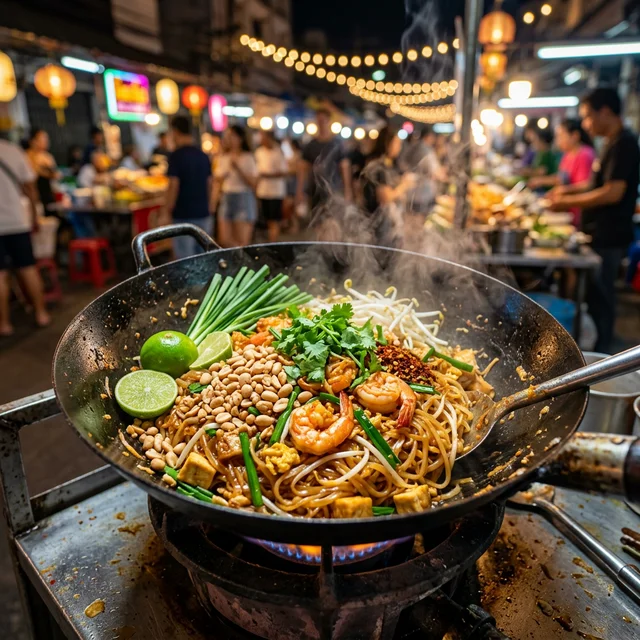
Southeast Asia is a food lover’s paradise. From the complex curries of Thailand to the fresh herbs of Vietnam, from the rich colonial-influenced cuisine of Malaysia to the bold flavors of the Philippines, every country in this region offers a unique and unforgettable culinary experience.
This guide maps out the ultimate Southeast Asian food trail — six countries, dozens of must-try dishes, and the best places to find them.
Vietnam 🇻🇳
Vietnamese cuisine is all about balance — salty, sweet, sour, and spicy elements harmonize in every dish, with fresh herbs adding brightness that sets it apart from other Asian cuisines.
Essential Dishes
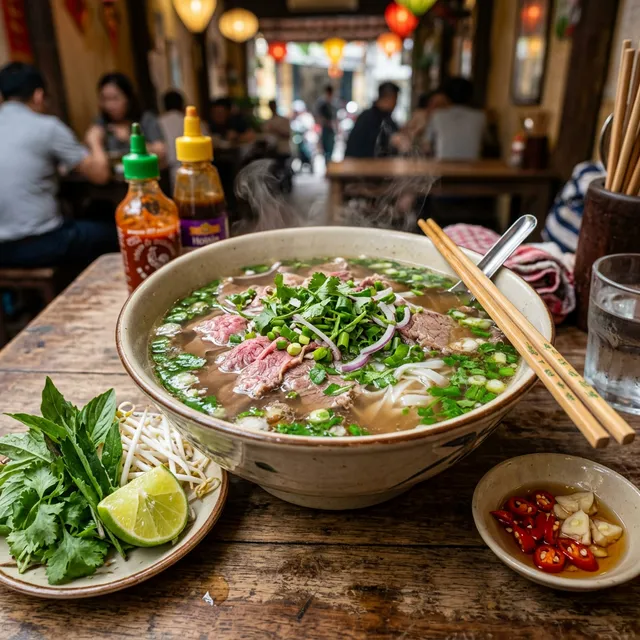
Pho — Vietnam’s national dish is a deeply fragrant broth simmered for hours with star anise, cinnamon, and coriander seeds, served with rice noodles, thin slices of beef or chicken, and a plate of fresh herbs including Thai basil, bean sprouts, and lime.
Bánh Mì — The world’s best sandwich: a crispy French baguette filled with pâté, cold cuts, pickled daikon and carrot, cilantro, chili, and cucumber. A perfect fusion of French colonial and Vietnamese flavors.
Bún Chả — Charcoal-grilled pork patties and sliced pork belly served with rice noodles, herbs, and a sweet-sour dipping sauce. This is the dish that Obama ate with Anthony Bourdain in Hanoi.
Cà Phê Sữa Đá — Vietnamese iced coffee: strong drip coffee sweetened with condensed milk over ice. Life-changing.
Bánh Xèo — Crispy, turmeric-yellow crepes filled with shrimp, pork, and bean sprouts, wrapped in lettuce and herbs.
Where to Eat
- Hanoi: Phở Gia Truyền (legendary pho since 1970s), Bún Chả Hương Liên (“Obama Bun Cha”)
- Ho Chi Minh City: Bánh Mì Huỳnh Hoa, Cơm Tấm Bụi
- Hoi An: Cao Lầu noodles at Morning Glory
Budget: $1–3 per meal
Thailand 🇹🇭
Thai cuisine is an explosion of flavors — sweet, sour, salty, spicy, and bitter dance together in dishes that are simultaneously complex and deeply satisfying.
Essential Dishes
Som Tum — Green papaya salad pounded in a mortar with chilies, lime, fish sauce, and peanuts. The balance of sweet, sour, salty, and spicy in one bite is quintessentially Thai.
Khao Soi — Northern Thai coconut curry noodle soup topped with crispy fried noodles and pickled mustard greens. A Chiang Mai specialty that rivals any curry on earth.
Massaman Curry — A rich, aromatic curry with Persian influences, featuring tender beef, potatoes, peanuts, and warm spices like cardamom, cinnamon, and star anise.
Larb — A minced meat salad with lime juice, fish sauce, chili flakes, and toasted rice powder — the national dish of neighboring Laos, but enormously popular in northeast Thailand.
Mango Sticky Rice — Sweet coconut-infused glutinous rice served with perfectly ripe mango and a drizzle of coconut cream. Heaven in a bowl.
Where to Eat
- Bangkok: Jay Fai (Michelin-starred street food), Thip Samai (pad thai), Yaowarat night market
- Chiang Mai: Khao Soi Mae Sai, Warorot Market
- Phuket: Raya Restaurant for southern Thai cuisine
Budget: $1–4 per meal
Malaysia 🇲🇾
Malaysian food is a magnificent melting pot of Malay, Chinese, Indian, and Peranakan traditions — resulting in one of the most diverse food scenes in the world.
Essential Dishes
Nasi Lemak — The national dish: fragrant coconut rice served with sambal, anchovies, peanuts, cucumber, and a boiled egg. Available everywhere from street stalls to fine restaurants.
Char Koay Teow — Smoky stir-fried flat rice noodles with prawns, cockles, bean sprouts, Chinese chives, and egg. Penang’s version is considered the gold standard.
Roti Canai — Buttery, flaky flatbread served with dhal or curry — the ultimate Malaysian breakfast.
Laksa — A spicy coconut curry noodle soup (Curry Laksa) or a tangy fish-based version (Assam Laksa). Both are incredible.
Satay — Marinated and grilled meat skewers served with peanut dipping sauce, ketupat (rice cake), and cucumber-onion relish.
Where to Eat
- Penang: Gurney Drive Hawker Centre, New Lane, Kimberley Street
- Kuala Lumpur: Jalan Alor night market, Nasi Kandar Pelita
- Malacca: Jonker Street Night Market
Budget: $1–4 per meal
Singapore 🇸🇬
Singapore may be small, but its food scene punches way above its weight. The hawker center culture — recognized by UNESCO — is the heart of Singaporean dining.
Essential Dishes
Hainanese Chicken Rice — Poached chicken served with fragrant rice cooked in chicken stock, accompanied by chili sauce and ginger paste. Singapore’s most iconic dish.
Chili Crab — Mud crab stir-fried in a sweet, savory, and spicy tomato-chili sauce. Messy, indulgent, and absolutely unforgettable.
Kaya Toast — Thick toast with coconut jam (kaya) and a slab of cold butter, paired with soft-boiled eggs and kopi (local coffee). The Singaporean breakfast ritual.
Bak Kut Teh — Peppery pork rib soup with garlic and herbs — a deeply comforting dish.
Char Siu — Cantonese BBQ pork glazed with honey and maltose, served over rice. Hawker Chan famously earned a Michelin star for this dish.
Where to Eat
- Tiong Bahru Market: One of the oldest and best hawker centers
- Maxwell Food Centre: Home of Tian Tian Hainanese Chicken Rice
- Chinatown Complex: The largest hawker center with 260+ stalls
- Lau Pa Sat: Iconic Victorian-era market with satay street
Budget: $3–8 per meal (Singapore is pricier than neighbors)
Indonesia 🇮🇩
Indonesian cuisine is incredibly diverse — with over 17,000 islands, the country boasts hundreds of distinct regional cuisines unified by bold spices and complex flavor profiles.
Essential Dishes
Nasi Goreng — Indonesia’s beloved fried rice with sweet soy sauce, shallots, garlic, chili, topped with a fried egg. Every cook has their own version.
Rendang — Slow-cooked beef in coconut milk and spice paste until the sauce reduces to a thick, deeply flavorful coating. Voted the world’s most delicious food by CNN readers.
Gado-Gado — Steamed vegetables, tofu, and tempeh dressed in a rich peanut sauce — Indonesia’s most famous salad.
Sate Ayam — Charcoal-grilled chicken skewers with peanut sauce, served with lontong (rice cakes) and pickled vegetables.
Bakso — Indonesian meatball soup with noodles, tofu, and fried shallots in a savory broth — the country’s favorite street snack.
Where to Eat
- Jakarta: Many food courts and street vendors around Sabang Street
- Yogyakarta: Malioboro Street for gudeg (sweet jackfruit stew)
- Bali: Pasar Badung for local favorites, Ibu Oka for babi guling
Budget: $1–3 per meal
Philippines 🇵🇭
Filipino cuisine is hearty, bold, and unafraid of strong flavors — vinegar, soy sauce, and fermented fish sauce form the backbone of many dishes.
Essential Dishes
Adobo — The unofficial national dish: meat (usually chicken or pork) braised in vinegar, soy sauce, garlic, bay leaves, and black peppercorns.
Lechon — Whole roasted pig with impossibly crispy skin — the centerpiece of Filipino celebrations. Cebu is famous for the best lechon.
Sinigang — A sour soup made with tamarind, tomatoes, and vegetables with pork or shrimp. Comfort food at its finest.
Sisig — Chopped pig face and ears sizzled on a hot plate with chili, onions, and calamansi lime — the ultimate beer food.
Halo-Halo — A colorful shaved ice dessert layered with sweetened beans, jellies, fruits, leche flan, ube ice cream, and evaporated milk.
Where to Eat
- Manila: Quiapo market, Toyo Eatery (modern Filipino fine dining)
- Cebu: Rico’s Lechon, Carbon Market
- Siargao: Local carinderia stalls for authentic home-cooking
Budget: $1–4 per meal
Planning Your Southeast Asian Food Trail
Suggested 3-Week Route
| Week | Countries | Food Focus |
|---|---|---|
| Week 1 | Vietnam (Hanoi → Hue → HCMC) | Pho, banh mi, regional specialties |
| Week 2 | Thailand (Bangkok → Chiang Mai) + Malaysia (Penang → KL) | Street food, curries, hawker fare |
| Week 3 | Singapore → Indonesia (Bali/Yogyakarta) | Hawker centers, rendang, local markets |
Tips for the Food Trail
- Eat where locals eat — If a restaurant is full of tourists, keep walking
- Go to markets early — Morning markets have the freshest ingredients
- Ask for “not spicy” — Southeast Asian “mild” can still be very hot for unaccustomed palates
- Bring digestive medicine — Just in case your stomach needs time to adjust
- Take a cooking class — Available in most major cities for $15–40
- Document your meals — You’ll want to remember that life-changing bowl of pho
Final Thoughts
Southeast Asia’s food scene is a testament to the region’s incredible cultural diversity. Every country, city, and street stall tells a story through its food — of trade routes and colonial influences, of family recipes passed down through generations, and of proud culinary traditions that continue to evolve.
The best part? You can eat like royalty for a few dollars a day. So book that flight, bring your appetite, and prepare for the tastiest trip of your life.